The Ultimate Guide to Laser Smoke Extractor in the UK
Key Takeaways
- A dedicated laser smoke extractor is essential for safely removing hazardous volatile organic compounds (VOCs) and fine particulate matter generated during laser cutting and engraving.
- Processing popular materials like MDF, plywood, and acrylic releases harmful byproducts, including formaldehyde, which require professional-grade filtration to manage safely indoors.
- The most effective systems utilise a 3-stage filtration process: a pre-filter for large debris, a HEPA filter for microscopic particulates, and an activated carbon layer for chemical odours.
- UK makers must consider both personal health regulations, such as COSHH guidance, and local nuisance laws when venting emissions in residential or shared commercial spaces.
- Compact internal filtration systems provide a reliable alternative to external venting, especially during the cold and wet British winter months when open windows are impractical.
TL;DR: A laser smoke extractor is a specialist filtration unit that captures smoke, fine dust and chemical fumes produced by laser cutting and engraving. For most UK users, the safest option is a 3-stage system with pre-filter, HEPA filtration and activated carbon, because it helps control harmful particulates and VOCs from materials such as MDF, plywood, acrylic and leather.
A laser smoke extractor is used to remove hazardous smoke, airborne particles and chemical vapours created during laser cutting and engraving. In practice, it protects your breathing zone, reduces odours, helps keep your workspace cleaner and supports safer indoor use of desktop lasers in homes, schools and small workshops across the UK.
Operating a desktop laser cutter transforms digital designs into physical reality, but the process inherently relies on thermal destruction. Whether you are slicing through dense MDF, engraving cast acrylic or customising leather goods, the laser beam vaporises the material. As a result, it produces a complex mixture of visible smoke, microscopic particulate matter and invisible chemical gases. Therefore, relying on an open window or a standard bathroom extractor fan is not sufficient for managing these emissions. A purpose-built laser smoke extractor is the most reliable way to create a safer, more comfortable working environment.
For hobbyists working in spare bedrooms, small businesses operating from garden studios and educational settings managing craft rooms, indoor air quality is a primary safety concern. In addition, the build-up of laser fumes can coat valuable equipment in sticky residue while also presenting immediate and long-term health risks. Based on our testing of compact extraction setups for indoor maker spaces, effective source capture and proper multi-stage filtration make a noticeable difference to smell control, visible haze and general workshop comfort.
What does a laser smoke extractor remove?
To understand why a specialised laser smoke extractor is necessary, it helps to examine the byproducts created during the cutting process. Different materials produce different chemical signatures when exposed to the intense heat of a CO2 or diode laser. Consequently, the right extraction setup needs to deal with both solid particles and gaseous pollutants.
Does laser cutting create harmful particulate matter?
Yes. When cutting timber, paper or card, the laser generates fine dust and ash. These particles are categorised by size. PM10 refers to inhalable particles with diameters of 10 micrometres and smaller. PM2.5 refers to fine inhalable particles with diameters of 2.5 micrometres and smaller. For context, a single human hair is roughly 70 micrometres in diameter. Because PM2.5 particles are so small, they can bypass some of the body’s natural respiratory defences and travel deeply into the lungs. Over time, repeated exposure to wood smoke in an enclosed space can contribute to respiratory irritation.
What VOCs are released during laser cutting?
While visible smoke is obvious, invisible volatile organic compounds can be the greater concern. Manufactured boards and synthetic materials contain glues and resins that break down under thermal stress.
- MDF and plywood: These materials often rely on urea-formaldehyde resins. When lasered, they can release formaldehyde gas along with other irritants. The pungent lingering smell associated with cutting MDF is one sign that VOCs are present in the air.
- Acrylic (PMMA): Cutting acrylic can release methyl methacrylate vapours. These fumes have a sharp sweet odour and may cause headaches or nausea if expos not properly controlled.
- Leather: Natural and synthetic leathers can produce strong odours alongside complex organic compounds that require robust filtration to manage effectively.
According to UK Health and Safety Executive guidance, employers must assess and control exposure to hazardous substances under COSHH where relevant. Although hobbyists at home are not usually operating under workplace enforcement in the same way as businesses, the underlying air quality risks do not change simply because the machine sits in a spare room rather than an industrial unit. Therefore, using an effective laser smoke extractor is one of the clearest practical steps you can take to reduce exposure.
How does a laser smoke extractor work?
Not all extraction systems are equal. For example, a simple inline fan pushing air through ducting only moves polluted air elsewhere unless it is discharged safely outdoors. By contrast, true filtration captures contaminated air at source and passes it through multiple barriers designed for different pollutant types. In most cases, an effective laser smoke extractor uses three stages of filtration.
What does the pre-filter do?
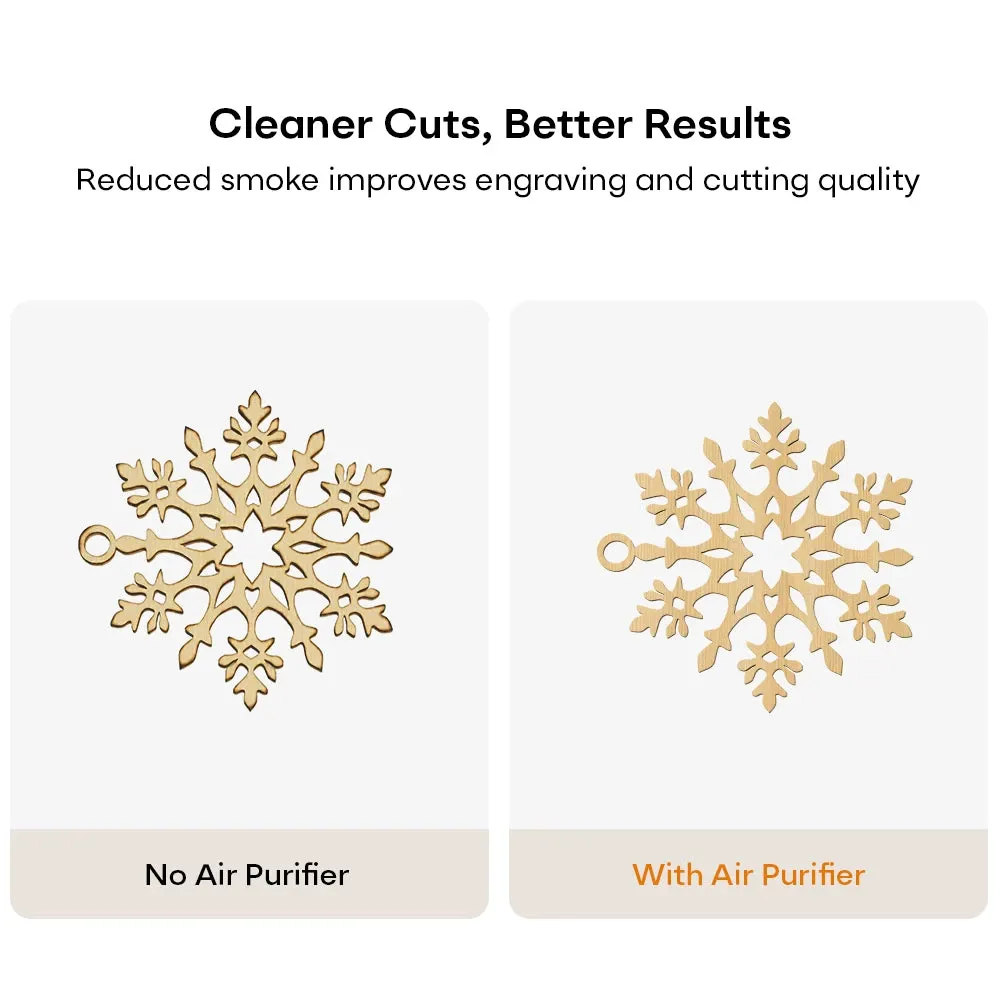
The pre-filter acts as the first line of defence. Typically made from coarse cotton or synthetic media, it traps larger particles such as soot, ash and sticky resin before they reach more expensive filters downstream. As a result, it helps protect overall system performance while keeping running costs under control. Pre-filters generally need replacing most often—weekly or monthly depending on usage—but they are usually inexpensive.
Why is HEPA filtration important for laser fumes?
Once larger debris has been removed, air moves into the High-Efficiency Particulate Air filter stage. This dense filter media captures very fine particulate matter created when lasering wood, paper and plastics. Under European standards, true HEPA-grade filtration must meet strict capture efficiency requirements for tiny airborne particles. Therefore this stage is particularly important if you want better control over PM2.5 within an indoor workspace. For more detail on how this technology fits into your setup, read our comprehensive HEPA fume extractor guide.
How does activated carbon remove odours and gases?
The final stage targets gases and odours that pass straight through particle filters. Activated carbon contains millions of microscopic pores that attract and hold many airborne chemical compounds through adsorption. In practical terms, this helps reduce smells from acrylic, MDF and leather while also improving general comfort in enclosed spaces. To explore this process further, review our detailed breakdown of the activated carbon filtration process.
Based on our testing with desktop lasers in enclosed workshops, odour complaints usually point to exhausted carbon rather than poor particle capture alone. In other words, if visible smoke seems controlled but smells linger badly throughout the room or property, the carbon stage often needs closer attention.
Do you need a laser smoke extractor for a desktop laser cutter?
In most indoor situations, yes. If you are using a diode or CO2 machine in a home office, garage, garden room or classroom, a dedicated extraction solution should be considered essential rather than optional. That is because even light-duty engraving creates airborne contaminants very close to where you stand or sit while operating the machine.
This matters even more in typical UK settings where rooms are smaller, winter ventilation is limited and neighbouring properties may be close by. Moreover, simply cracking open a window can lower comfort without meaningfully controlling exposure at source. A proper system captures emissions as they are produced rather than allowing them to spread around the room first.
Is venting outside enough for laser fumes?
Sometimes external venting can work well, but it depends heavily on your property, machine location and local conditions. For example, a short direct duct run to an appropriate outdoor discharge point may be practical in some workshops. However, in flats, terraced homes or shared commercial spaces, venting outdoors can create odour nuisance issues or prove difficult to install correctly.
According to UK good practice under COSHH principles, contaminants should be controlled effectively and exposure reduced so far as reasonably practicable. Therefore many users prefer filtered recirculating systems or hybrid setups that improve flexibility while avoiding weather-related problems. This can be particularly helpful during wet British winters when doors and windows are kept shut for long periods.
What should you look for when choosing a laser smoke extractor?
How much airflow do you need?
You need enough airflow to capture fumes at source without allowing them to escape from around the bed or enclon general, larger machines, faster cutting speeds and smokier materials demand higher airflow. However, raw airflow figures alone do not tell the full story because restrictive filters also affect real-world performance.
How important is filter capacity?
Filter size directly affects service life. If you cut MDF regularly, small low-capacity units may become expensive to run because filters saturate quickly. Therefore it makes sense to compare ongoing consumable costs rather than focusing only on purchase price.
Should noise levels matter?
əYes, especially if your machine runs indoors near desks, customers or teaching areas. Quieter extraction improves day-to-day usability and makes longer jobs easier to manage. Based on our testing of compact workshop units, noise becomes one of the biggest quality-of-life factors after basic safety performance.
h3>If you want dependable indoor extraction backed by UK-focused support considerations, Blazex AirP systems are designed around practical maker-space use cases including desktop lasers operating in enclosed environments.
Can I legally vent this outside from my premises?
Check your tenancy agreement,
building rules
and whether exhaust could affect neighbours or passers-by.< / p >
What materials will I cut most often? < strong >How often will I use it?
MDF,
plywood
and acrylic place different demands on filters compared with occasional paper engraving.< / p >
A weekend hobby machine has different service expectations from daily business production.< / p >
< strong >Do I have space beside or below the machine?
Compact footprint matters in British workshops where floor space is often limited.< / p >
Ready to try Blazex AirP?
Shop Now — £119.20